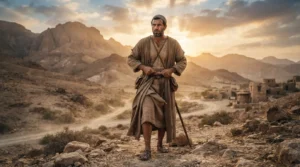
A midnight song rises from a prison in Philippi. Paul and Silas have been beaten, chained, and locked away. Yet instead of giving in to fear, they pray and sing praises to God.
That scene gives us one of the clearest pictures of Silas in the Bible.
Silas was more than a companion of the apostle Paul. He was a trusted Christian leader, missionary, and faithful servant who stood firm during hardship. His life shows what it can look like to serve God when the road is painful and uncertain.
The Silas Bible meaning is closely connected with faithfulness, courage, partnership in ministry, and perseverance. His name also has an interesting linguistic background, but the greater significance of Silas comes from the way he lived and served Christ.
What Does Silas Mean in the Bible?
Silas was an important leader in the early Christian church who served alongside Paul and helped strengthen believers.
The name Silas is generally understood to be related to Silvanus, a Latin name connected with silva, meaning “forest” or “woodland.” In the New Testament, Silas is the shorter form commonly used in Acts, while Paul refers to him as Silvanus in his letters.
But the Biblical significance of Silas is not based only on the meaning of his name.
His life gives us a picture of:
- Faithfulness during difficult seasons
- Courage in persecution
- Partnership in Christian ministry
- Encouragement of other believers
- Trust in God during suffering
- Willingness to follow God’s direction
Silas did not seek the spotlight. Yet his quiet faithfulness made him an important part of the early church.
The Original Meaning of the Name Silas
The exact etymology of Silas is not completely certain, so it is wise not to claim more than the evidence allows.
Silas is commonly associated with Silvanus, a Latin name derived from silva, meaning “forest” or “woodland.” Silvanus was also the name of a Roman deity associated with forests, although the Biblical Silas should not be understood through pagan worship or Roman mythology.
In the New Testament, the connection between Silas and Silvanus is especially important because Paul uses Silvanus in his letters.
For example, Paul mentions:
“Silvanus, and Timotheus” 1 Thessalonians 1:1
Silas is therefore not simply a name with an attractive definition. The Bible gives the name significance through the life of the man who carried it.
The Biblical meaning of Silas is best understood through his character and ministry rather than through name etymology alone.
Who Was Silas in the Bible?
Silas appears mainly in the book of Acts, where he becomes one of Paul’s closest ministry partners.
He was already respected among the believers in Jerusalem.
After the Jerusalem Council, the apostles and elders selected Silas to accompany Paul and Barnabas. Acts describes him as a leading man among the brothers and also as a prophet.
This tells us something important.
Silas was not a random traveler who happened to join Paul. He was already a trusted Christian leader.
Silas Was a Leader in Jerusalem
In Acts 15:22, Silas was chosen to travel with Paul and Barnabas to Antioch.
His mission was important. The early church needed to communicate the decision of the Jerusalem Council to Gentile believers.
Silas helped deliver this message and encouraged the Christians in Antioch.
Acts 15:32 says that Silas and Judas, who were also prophets, encouraged and strengthened the believers.
That may be one of the most important details about Silas.
He was not simply a preacher. He was an encourager.
Silas and Paul: A Powerful Ministry Partnership
Silas became Paul’s ministry partner after Paul and Barnabas separated.
According to Acts 15:40, Paul chose Silas and departed, being commended by the believers to the grace of the Lord.
Their journey took them through parts of Asia Minor and into Macedonia.
This partnership shows that Christian ministry is often shared.
Paul was a major apostle, but he did not work alone. God used people like Silas to teach, encourage, travel, suffer, and serve alongside him.
Silas reminds us that being a faithful helper in God’s work is not a lesser calling.
Sometimes God uses a person behind the scenes to accomplish something much bigger than that person can see.
Silas in Prison: The Most Famous Story
The most memorable story about Silas happens in Acts 16.
Paul and Silas were in Philippi. Paul had cast a spirit out of a slave girl, which angered people who had been making money from her fortune-telling.
A crowd attacked them.
Paul and Silas were beaten and thrown into prison.
Their feet were fastened in stocks.
From a human point of view, this was a terrible situation.
But then something remarkable happened.
Acts 16:25 says that around midnight, Paul and Silas were praying and singing hymns to God while the prisoners listened.
Imagine the scene.
They had been beaten.
They were imprisoned.
They did not know what would happen next.
Yet they worshiped.
Their circumstances had changed, but their trust in God had not.
What Does Silas Teach Us About Faith?
The prison story reveals a powerful lesson about Christian faith.
Faith does not mean that hardship disappears.
Sometimes faith means worshiping God while the hardship is still there.
Silas did not know that an earthquake was coming.
He did not know the jailer would soon ask how to be saved.
He did not know how the night would end.
He simply remained faithful.
That is a valuable lesson for Christians today.
You may pray without knowing the answer.
You may obey without seeing the result.
You may continue trusting God without understanding the situation.
Faith is not always knowing what God will do. Sometimes it is trusting Him when you do not know.
The Earthquake and the Philippian Jailer
While Paul and Silas were praying and singing, a great earthquake shook the prison.
The doors opened, and the prisoners’ chains were loosened.
The jailer woke up and thought the prisoners had escaped. He was about to take his own life when Paul called out that everyone was still there.
The jailer then asked:
“What must I do to be saved?”
Paul and Silas answered with the message of faith in Jesus Christ.
The jailer and his household heard the Word of the Lord, and they responded in faith.
The story began with suffering but ended with salvation and joy.
This is one reason Silas is such a meaningful Biblical figure.
His difficult night became part of a story through which another family encountered the gospel.
Key Bible Verses About Silas
Acts 15:22 Silas Was a Trusted Leader
The Jerusalem church chose Silas to travel with Paul and Barnabas.
This shows that the early believers trusted him with an important responsibility.
Acts 15:32 Silas Encouraged Believers
Silas was described as a prophet who encouraged and strengthened the Christians in Antioch.
His ministry included building others up in faith.
Acts 15:40 Silas Joined Paul
Paul chose Silas as his ministry partner after separating from Barnabas.
This marked the beginning of an important missionary partnership.
Acts 16:25 Silas Worshiped in Prison
Paul and Silas prayed and sang hymns while imprisoned.
This passage gives one of the strongest pictures of their courage and trust in God.
Acts 16:31–34 The Jailer Believed
The Philippian jailer and his household heard the gospel and responded.
The story shows how God can use difficult circumstances to open unexpected doors for ministry.
1 Thessalonians 1:1 Silvanus Served With Paul
Paul’s letter names Silvanus alongside Paul and Timothy.
This provides an important connection between the Silas of Acts and the Silvanus mentioned in Paul’s letters.
2 Corinthians 1:19 Silvanus Preached Christ
Paul refers to Jesus Christ as having been proclaimed among the Corinthians by Silvanus, Timothy, and Paul.
This shows that Silas continued to play an active role in spreading the gospel.
The Spiritual Meaning of Silas
The Bible does not give a single sentence saying, “The spiritual meaning of Silas is…” Instead, his spiritual significance emerges from his life.
Several themes stand out.
1. Silas Represents Faithfulness
Silas repeatedly served where he was needed.
He traveled.
He encouraged believers.
He preached.
He endured suffering.
He continued serving.
His example reminds Christians that faithfulness is often built through many ordinary acts of obedience.
2. Silas Shows Courage Under Pressure
Being beaten and imprisoned could have caused Silas to lose heart.
Instead, he worshiped.
His courage was not the absence of pain. It was the decision to keep trusting God despite pain.
3. Silas Was an Encourager
Acts 15:32 specifically describes Silas as someone who encouraged believers.
That makes his life especially meaningful for Christians who feel called to support others.
Not every ministry happens from a stage.
Sometimes ministry is a conversation, a prayer, a word of hope, or simply staying beside someone during a difficult season.
4. Silas Demonstrates Christian Partnership
Silas worked with Paul.
He was willing to share the journey rather than demand recognition.
His story shows that God’s work often happens through partnership rather than individual effort.
5. Silas Shows That Suffering Does Not Make Ministry Meaningless
The prison in Philippi looked like a setback.
But God used that moment.
The jailer heard the gospel.
The prisoners heard their worship.
The church witnessed God’s power.
Silas’s suffering became part of his testimony.
What Does Silas Teach Christians Today?
Silas’s story still speaks to everyday Christian life.
When You Are Waiting
Silas did not know how long his prison night would last.
If you are waiting for an answer to prayer, his story reminds you that waiting does not mean God has forgotten you.
When You Face Opposition
Following God does not guarantee an easy path.
Silas experienced rejection, violence, and imprisonment.
Yet he continued serving Christ.
When You Feel Like a Background Person
Silas was not always the central figure in the story.
Still, his contribution mattered.
You do not need a famous position to have a meaningful place in God’s work.
When Someone Needs Encouragement
Silas was known for strengthening believers.
Ask yourself who around you needs hope, prayer, or a kind word today.
When You Do Not Understand God’s Plan
Silas could not see what God was going to do in the Philippian prison.
Neither can we always see the purpose of a difficult season.
But we can choose faithfulness while we wait.
Common Misunderstandings About Silas
Was Silas the same person as Silvanus?
The New Testament strongly connects the two names. Silas appears in Acts, while Silvanus appears in Paul’s letters. Most interpreters understand them as referring to the same person.
Does the name Silas have a Hebrew meaning?
Silas should not automatically be given a Hebrew meaning. Its connection with the Latin Silvanus is more commonly discussed.
Claims that assign Silas a specific Hebrew spiritual meaning should therefore be treated carefully.
Does Silas symbolize a specific spiritual blessing?
The Bible does not establish a fixed symbolic meaning for the name Silas.
It is better to learn from his Biblical character and actions than to create a symbolic meaning that Scripture does not state.
Was Silas one of the Twelve Apostles?
No. Silas was an important early Christian leader and missionary, but Scripture does not identify him as one of Jesus’ Twelve Apostles.
A Deeper Christian Perspective on Silas
One of the most beautiful things about Silas is that his story points beyond himself.
He helped carry the gospel into new places.
He encouraged believers.
He endured suffering.
He worshiped in prison.
And through his ministry, people heard about Jesus.
His story reminds us that God often works through people who simply remain available and faithful.
Silas did not control the circumstances around him.
He could not control the prison.
He could not control the crowd.
He could not control the earthquake.
But he could choose how he responded.
That is where his example becomes deeply personal.
You may not control your season, but you can choose faithfulness within it.
5 Practical Faith Lessons From Silas
1. Worship Before You See the Answer
Silas worshiped before the prison doors opened.
Do not make your worship depend only on visible results.
2. Encourage Someone Who Is Struggling
Silas strengthened other believers.
Your words may become part of God’s answer to someone else’s prayer.
3. Stay Faithful When Life Feels Unfair
Silas suffered even while doing God’s work.
Hardship does not automatically mean you are outside God’s will.
4. Serve Without Needing Attention
Silas worked alongside Paul without becoming the center of the story.
Faithful service matters even when few people notice it.
5. Trust God With the Outcome
Silas could not predict what would happen in prison.
His responsibility was faithfulness. God handled the outcome.
FAQs:
What does Silas mean in the Bible?
Silas is commonly connected with Silvanus, a Latin name associated with silva, meaning “forest” or “woodland.” Biblically, Silas is especially significant as a Christian leader, missionary, encourager, and companion of Paul.
What is the spiritual meaning of Silas?
The Bible does not give Silas a fixed symbolic meaning. His life can, however, teach Christians about faithfulness, courage, encouragement, perseverance, and trust in God during suffering.
Is Silas the same as Silvanus in the Bible?
Yes, Silas and Silvanus are generally understood to refer to the same early Christian leader. Silas is the name used prominently in Acts, while Paul uses Silvanus in several letters.
Where is Silas mentioned in the Bible?
Silas appears especially in Acts 15–18. He is also mentioned as Silvanus in passages such as 1 Thessalonians 1:1, 2 Corinthians 1:19, and 1 Peter 5:12.
What can Christians learn from Silas?
Christians can learn to remain faithful during hardship, encourage other believers, serve without seeking attention, and trust God even when they cannot see the outcome.
Was Silas a companion of Paul?
Yes. Silas became one of Paul’s important ministry partners and traveled with him during missionary work recorded in Acts.
Why is Silas important in the Bible?
Silas played an important role in strengthening the early church, spreading the gospel, supporting Paul, and demonstrating courage during persecution. His worship in prison is one of the best-known examples of faith under pressure in Acts.
Conclusion:
The Silas Bible meaning becomes clearest when we look beyond the name and into the life of the man who carried it.
Silas was a trusted leader. He encouraged believers. He traveled with Paul. He preached Christ. And when suffering came, he did not abandon his faith.
His night in the Philippian prison remains a powerful reminder that faith can sing even before the chains fall away.
Silas teaches us that God can use quiet faithfulness in powerful ways. A prison can become a place of testimony. A difficult journey can become a ministry. An unseen servant can strengthen an entire community.
If you are walking through a difficult season, Silas’s story offers a simple encouragement: remain faithful, keep praying, and trust God with what you cannot yet see.

I am Noah Bennett, a passionate faith writer and Bible researcher at BiblicalGlowz.com, dedicated to sharing clear, inspiring, and Scripture-based Christian insights.