The eunuch in the Bible meaning is deeper than the simple idea of a person who could not have children. In Scripture, eunuchs appear in different settings, and their stories reveal important truths about identity, faith, service, acceptance, and God’s love.
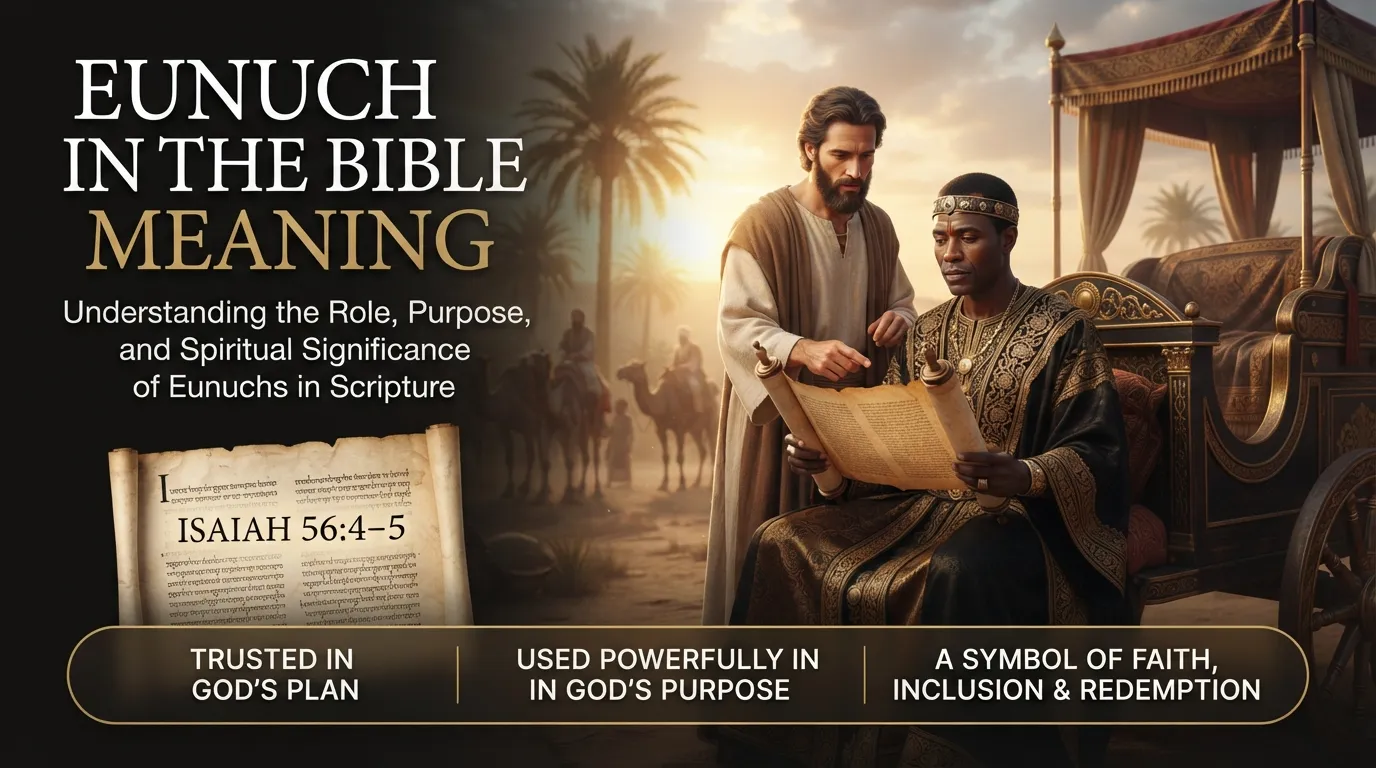
One of the most powerful examples is the Ethiopian eunuch in Acts 8. He was traveling home while reading the book of Isaiah. He had questions about what he was reading, and God sent Philip to help him understand.
After hearing the good news about Jesus, the eunuch believed and was baptized. His story shows that God can meet a person right in the middle of their questions and lead them toward truth.
The Bible also speaks about eunuchs in Isaiah 56, where God gives a beautiful promise to faithful eunuchs. He says they will receive a name and place within His house that is better than sons and daughters.
So, what does a eunuch mean in the Bible? The answer can point to more than physical condition. It can represent a person who feels different, excluded, unable to fit normal expectations, or called to serve God in a unique way.
The biblical message is one of hope, belonging, and spiritual transformation.
Biblical Meaning of Eunuch in the Bible
In biblical times, the word eunuch could describe a man who had been physically castrated. It could also be used more broadly for a royal official or court servant. The exact meaning depends on the passage and its historical setting.
1. A Eunuch Can Represent Someone Who Feels Different
In ancient society, family and having children were often closely connected with identity and honor. A eunuch could feel separated from those normal expectations.
Yet Isaiah 56 gives a powerful message of hope:
“Let not the eunuch say, ‘Behold, I am a dry tree.’” — Isaiah 56:3
God tells faithful eunuchs that they should not believe they have no value.
This teaches an important spiritual truth: your worth does not come only from what you can produce or achieve. Your value comes from God.
Someone today may feel different because of their past, family situation, weaknesses, or life circumstances. The message of Isaiah 56 still offers comfort. God sees people who feel forgotten.
2. A Eunuch Can Symbolize Acceptance by God
Isaiah 56:4–5 gives eunuchs a special promise. God says He will give them a place and a name within His house.
This is a beautiful picture of belonging.
The world may place labels on people. God looks at the heart and welcomes those who trust Him.
The passage reminds Christians that God’s family is not built only around human expectations. Faith and obedience matter deeply.
3. The Ethiopian Eunuch Shows Spiritual Hunger
One of the clearest examples appears in Acts 8:26–40.
The Ethiopian eunuch was an important official serving the queen of Ethiopia. He had traveled to Jerusalem and was returning home while reading Isaiah.
Philip approached him and asked if he understood what he was reading.
The eunuch replied that he needed someone to guide him.
This moment reveals something important: spiritual growth often begins with an honest question.
The eunuch was not ashamed to admit that he needed help. Philip explained the Scripture and told him about Jesus.
After hearing the gospel, the eunuch saw water and asked to be baptized.
His response shows faith, obedience, and spiritual awakening.
4. The Eunuch Represents Transformation
The story in Acts does not end with learning information. The eunuch responds to God’s message.
He believes in Jesus and is baptized.
Acts 8:39 says that after the baptism, the eunuch went on his way rejoicing.
That joy is important.
He began the journey as someone searching for understanding. He ended it with faith and joy.
This gives the biblical story a powerful spiritual message: God can turn confusion into clarity and searching into faith.
5. Jesus Also Spoke About Eunuchs
In Matthew 19:12, Jesus mentions different kinds of eunuchs while teaching about marriage and human life.
He refers to people who were born that way, people who were made eunuchs by others, and those who chose a life of celibacy for the sake of God’s kingdom.
This passage shows that Scripture recognizes that human lives and circumstances can be different.
The Bible does not teach that every person’s calling must look the same.
Some people serve God through marriage and family. Others serve Him through different paths of life.
The key lesson is faithfulness to God’s calling.
6. Eunuch Meaning Can Point to Spiritual Service
A eunuch in Scripture may also appear as a servant or official in a royal setting.
This can remind us that God can use people in many roles.
A person’s social position, family status, or physical condition does not prevent God from using them.
The Ethiopian eunuch is a strong example. He became one of the early people to carry the message of Jesus beyond Jerusalem.
His story shows that God’s purpose can reach people from every background.
Spiritual Significance and Symbolism
The spiritual symbolism of a eunuch in the Bible can be connected with belonging, surrender, service, and transformation.
Feeling Like You Do Not Belong
If you feel different from others, the story of the eunuch can bring comfort.
Isaiah 56 reminds us that God sees people who feel excluded.
You may look at your life and think, “I am missing something.”
God’s message is different: you are not forgotten.
A Life of Surrender
Matthew 19:12 also connects the idea of eunuchs with people who live differently for the sake of God’s kingdom.
This can point to surrender.
Following God sometimes means choosing a path that looks different from what society expects.
Christian faith calls believers to trust God’s plan even when it does not look like everyone else’s journey.
Spiritual Growth Through Questions
The Ethiopian eunuch teaches another powerful lesson.
He had questions, and he searched Scripture for answers.
This is a healthy part of faith.
If you have questions about God, Jesus, prayer, or the Bible, you do not need to hide them. Bring them to God through prayer and Scripture.
The eunuch’s story shows that honest questions can become the beginning of deeper faith.
A New Identity in God
The eunuch’s story also points toward transformation.
He was not defined by his physical condition or social position. His encounter with the gospel gave him a new spiritual direction.
For Christians, this points to a greater truth: our identity is ultimately found in God, not in the labels people place on us.
Biblical Interpretations in Dreams or Real Life
If you see a eunuch in a dream, the Bible does not give one fixed dream interpretation. Scripture should guide our understanding rather than assuming every dream is a direct message from God.
A peaceful dream involving a eunuch may remind you of acceptance, belonging, spiritual growth, or God’s ability to use people in unexpected ways.
A troubling dream may cause you to reflect on feelings of rejection, loss, weakness, or being different from others.
If the eunuch appears while reading Scripture, the scene may naturally remind you of the Ethiopian eunuch in Acts 8 and the importance of seeking spiritual understanding.
If you experience something like this, pray for wisdom rather than rushing to conclusions. God’s guidance should always agree with His character and the truth of Scripture.
Practical Lessons & Faith Insights
The story of the eunuch gives us several simple lessons:
- God sees those who feel forgotten.
- Your worth does not depend on human expectations.
- Questions can lead to deeper faith.
- God can use people from every background.
- Trust God’s purpose, even when your path looks different.
Take time to pray, read Scripture, and ask God for wisdom.
FAQs:
1. What is the meaning of eunuch in the Bible?
A eunuch was generally a man who had been castrated, but the term could also describe a royal official or court servant. Biblical passages show different uses depending on context.
2. What does the Ethiopian eunuch represent?
The Ethiopian eunuch in Acts 8 represents spiritual hunger, faith, acceptance, and transformation. He searched Scripture, learned about Jesus, believed, and was baptized.
3. What does Isaiah 56 say about eunuchs?
Isaiah 56 gives faithful eunuchs a promise of belonging. God tells them that they will receive a lasting name and place in His house, showing His acceptance and grace.
4. What did Jesus mean by eunuchs in Matthew 19:12?
Jesus mentioned different situations involving eunuchs, including people born that way, those made eunuchs by others, and those who choose celibacy for God’s kingdom. The passage recognizes different life paths and callings.
5. Is seeing a eunuch in a dream a biblical sign?
The Bible does not provide one universal meaning for dreaming about a eunuch. Such a dream may prompt reflection on identity, belonging, service, or spiritual growth, but it should be tested through prayer and Scripture.
Conclusion:
The eunuch in the Bible meaning carries a powerful message of hope, acceptance, faith, and transformation. From Isaiah’s promise to the Ethiopian eunuch’s joyful faith, Scripture shows that God does not forget people who feel different or excluded.
Your life does not have to look like everyone else’s to have purpose. God knows you, values you, and can use your life for His glory. Seek Him in prayer, trust His Word, and walk forward with faith.

I am Samuel Harris, a passionate Christian writer and Bible researcher dedicated to sharing biblical insights through BiblicalGlowz.com, helping readers understand Scripture, faith, and spiritual meaning.